Did My Car Battery Die Prematurely?

Did you recently replace your car battery with a new one, and now your new one is dead? If so, you are probably puzzled as much as you are frustrated. After all, car batteries cost money, your hard-earned money; plus, they are required if you want your car to get you to where you need to be, like work or school. So, why did your car battery die so soon?

Continue below to learn how long car batteries are designed to last, plus which factors can drain a car battery faster.

Auto Salvage Louisville Kentucky 502-804-5605

Average Car Battery Lifespan

There are several different types of car and truck batteries on the market. However, the average automotive battery is designed to last between three and five years. If your new car battery recently died after replacing it, this bit of information might frustrate you even more. But there could be good reason why your car battery died prematurely.

Things That Drain a Car Battery Faster:

Driving Patterns

Your driving patterns and habits can have a significant impact on the lifespan of your car battery. For instance, if you frequently take short trips, you could be further draining your car battery. Each time you start your car, you expend more battery power, and short trips on a more frequent basis does not allow your car battery to fully recharge between trips.

If you would leave your car parked for extended periods of time, it can also drain a car battery pretty fast. Car batteries naturally self-discharge after a long period of in-operation, which is why it is recommended to remove car battery before storing a vehicle for an extended period of time.

Weather and Climate

Nature can also play a role in a quickly draining car battery. Extreme temperatures is one of the most common reasons why car batteries drain prematurely. One way to avoid this is covering your car engine with a thermal blanket during the colder seasons. This will keep your car battery and internal components warm, allowing it to work more efficiently.

In extremely hot conditions, car batteries can drain quickly due to heat-induced deterioration. For this reason, it is important to park in the shade or within a structure during the warmer seasons of the year.

Car Maintenance

There is a very good reason why automakers put together a factory scheduled maintenance plan for your make and model vehicle. Proper car maintenance is vital to the safety, longevity, and performance of your vehicle. If you do not take good care of your car battery, it will die prematurely. It is important to have your car battery cleaned on a routine basis to prevent battery corrosion.

If you notice a white or greenish buildup around your battery cells, use an old toothbrush and a baking soda water mixture to gently clean them off. In addition to cleaning your car battery, you want to regularly check that it’s properly mounted and that all cables are fastened. If the car battery gets knocked out of place, even slightly, it can immediately begin overworking, and thus, drain of power faster.

Are you stuck with a bunch of old or broken auto parts that you want to get rid of in Central Indiana? Contact GC’s Junk Cars at 502-804-5605 to sell junk car parts in Louisville, Kentucky for an instant cash payout. Sell us a whole junk car if you have one! Free junk car removal!

Related Posts:

How to Safely Toss Out an Old Car Battery
The Most Expensive Auto Repairs That Can Total Your Car
Current Scrap Prices for Catalytic Converters

3 Hazardous Auto Parts and How to Dispose of Them Safely

If you have some car parts or materials laying around and you are ready to get rid of them, be sure you know how to do so safely and according to local and federal regulations. There are certain auto parts and materials that are too hazardous for conventional trash disposal. If you are attempting to dispose of these particularly dangerous or harmful car parts, you must follow proper protocol.

Continue reading to learn the top 3 most hazardous parts of a vehicle and what you can do to ensure their tossed out responsibly.

Louisville KY Junk Car Service 502-804-5605

Dangerous Car Parts and Materials

A car in general is arguably dangerous, so the rest of it can certainly pose a wide range of risks. But when it comes to hazardous materials, there are 3 auto parts in particular that must be disposed of according to local, state, and federal regulations. These car parts are airbags, batteries, and gasoline.

Airbags

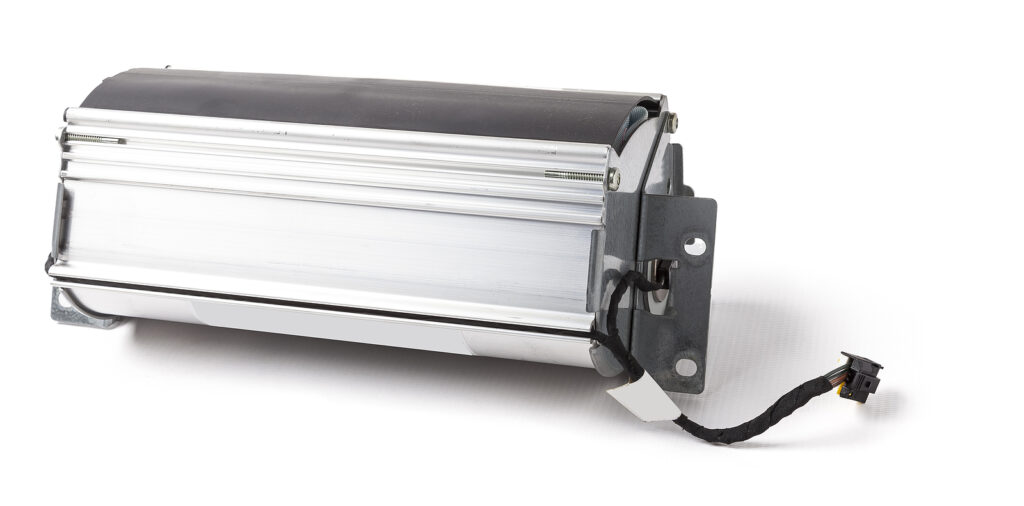
The law deems airbags, or Supplemental Restraint Devices (SRS Devices), as an automotive part that contains a reactive hazardous waste. Under the Resource Conservation and Recovery Act (RCRA) and subsequent regulations, the law does not allow you to simply throw an airbag out in your regular trash pickup container, whether it is new or deployed. If you do, you can be cited for illegal disposal of a reactive hazardous waste. What makes airbags hazardous? Well, they contain a long list of constituents that are combustible and potentially explosive, including propellants, ignitable chemicals, and more.

All airbags must be disposed at a certified airbag handler, approved hazardous waste disposal center, or designated airbag collection facility.

Car Batteries

Car batteries are another hazardous auto part that should be disposed of responsibly and in accordance with all local, state, and EPA regulations. Car batteries contain chemicals and metals that can be toxic to the surrounding environment. After three or four years, your car battery will need to be replaced. Be sure you have the proper instructions on how to get rid of an old or broken car battery in your community.

Car batteries can actually be recycled, so choose a local scrap metal recycling center or auto salvage lot to take yours.

Gasoline

Although not actually an auto part, gasoline is an imperative part of driving your gas-powered car, and it is common to find yourself with an old stash you no longer need. You might have some old gasoline laying around for a lawn mower or scooter you no longer have. Or perhaps you are siphoning old, dirty fuel out of a fuel-powered equipment. Regardless of why you have old cans of gasoline or diesel fuel on your hands, it is your responsibility to dispose of it safely, and you guessed it, while adhering to all local and state laws.

Locate a designated gasoline disposal facility or hazardous waste disposal center in your city. They will instruct you to transfer your gasoline or diesel into a government-approved container, like those traditional red plastic cans you see around.  

Do you have an old or junked car taking up space in your garage? Contact GC’s Junk Cars at 502-804-5605 to sell your junk car in Louisville, Kentucky for cash on the spot! We provide free junk car removal too!

Related Posts:

Is My Car Totaled if the Airbag Deploys?
3 Reasons Why a Car is Never Wasted
Do You Need Junk Car Disposal in Kentucky?

Louisville Junk Car Buyers 502-804-5605

How to Tell if Your Car is Leaking Transmission Fluid

Transmission fluid is just one of the seven vital automotive fluids every vehicle needs in order to operate safely and efficiently. If you suspect that your vehicle is losing transmission fluid through a leak, it is important that you catch the leak early on and resolve it right away.

Continue reading to learn how to identify the common signs of a transmission leak, plus how to make back cash if your transmission breaks down.

Junk Car Lot Louisville KY 502-804-5605

The Importance of Transmission Fluid

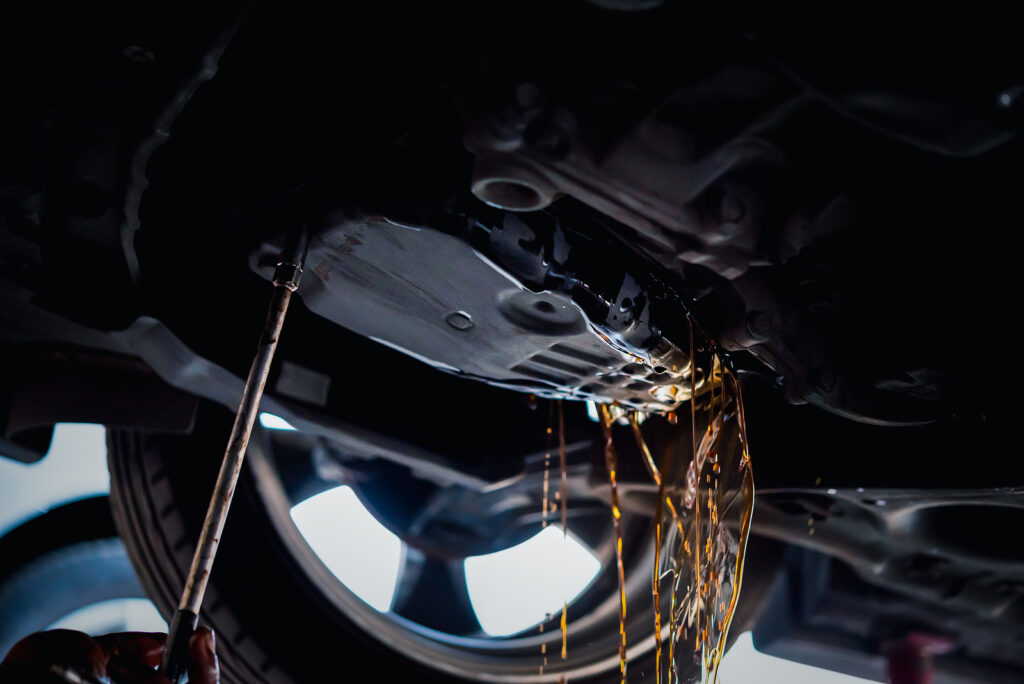
Transmission fluid is vital for both manual and automatic transmission vehicles. For vehicles with manual gearboxes, this commonly burgundy but sometimes green fluid is responsible for lubricating all of the internal bearings, gears, and moving parts of a car engine, which prevents unwanted friction and grinding.

In vehicles with automatic transmissions, or self-shifting transmissions, the transmission fluid works to keep all moving parts and bearings properly lubricated. It also generates and assists with hydraulic pressure and friction, which allow all of the internal parts to perform, and even helps keep the transmission cool.

Identifying a Transmission Fluid Leak

Transmission fluid should be changed every 30,000 miles ((50,000 kilometers). By keeping up on routine maintenance, you can avoid transmission fluid leaks and additional mechanical problems. If your vehicle is leaking a mystery liquid, and you think it might be transmission fluid, here are some of the signs to look for that may prove your suspicions to be true:

Color

If the fluid leaking from your vehicle is brown or red in color, it could very well be transmission fluid. Although some transmission fluid is green, the majority of transmission fluid on the market is read. Over time, it may become darker and appear browner in color. The only other automotive fluids that might be green or red are windshield wiper fluid and coolant, but both solutions are much thinner in comparison to transmission fluid, having a watery-like viscosity.

Smell

You may be able to identify the mystery liquid leaking from your vehicle through touch and smell. Transmission fluid has an oil like consistency and may smell a bit like petroleum. Sometimes prior transmission fluid can smell burnt, which indicates that it’s time for to be changed.

Location

Try to identify where the leak is coming from. Typically, transmission fluid leaks occur near the front or midsection of the vehicle. If the leak coming from your car is located more towards the back, it could be a different kind of leak entirely.

Acceleration Power

When driving your vehicle, if you notice that it’s taking longer to accelerate, or you are having difficulty shifting, it could be that your vehicles losing transmission fluid. Transmission slipping is another common indication that you may be low on transmission fluid.

Has your transmission given up for good, but the cost to replace it exceeds your car’s current market price? No problem! Sell your junk car in Louisville for cash on the spot to GC’s Junk Cars! We pay cash on the spot and provide free junk car removal service with our own in-house tow truck!

Related Posts:

Current Scrap Prices for Catalytic Converters
The Most Expensive Auto Repairs That Can Total Your Car
A DIY Guide for Car Radiator Flushing

Louisville Junk Car Buyers 502-804-5605

Facts About Engine Sludge

Each year you have your vehicle, it incurs more and more wear and tear. Many types of wear and tear are imminent and cannot be controlled or avoided, but many others can. With regular scheduled car maintenance, you can protect your vehicle from excessive or premature automotive damages. If you neglect to take a car in for routine service, your vehicle can eventually experience serious mechanical malfunctions and breakdowns. One such result of poor car maintenance is engine sludge.

Continue reading to learn what you need to know about engine sludge, including where it comes from, why it’s harmful to a vehicle, and how to get rid of it responsibly.

Louisville KY Auto Salvage Yard 502-804-5605

Automotive Engine Sludge is a Serious Problem

Engine sludge is a destructive substance, and therefore a serious problem, as it can lead to several mechanical breakdowns and defects within the engine and other automotive systems within the vehicle. Even just a little sludge can eventually damage the engine and its inner components, overtime. For this reason, it is imperative to have engine sludge problems treated as soon as possible. The longer you wait, the more damage will result. If engine sludge is never dealt with, it can render a vehicle a total loss.

What You Need to Understand About Engine Sludge:

Engine Sludge is Formally Motor Oil

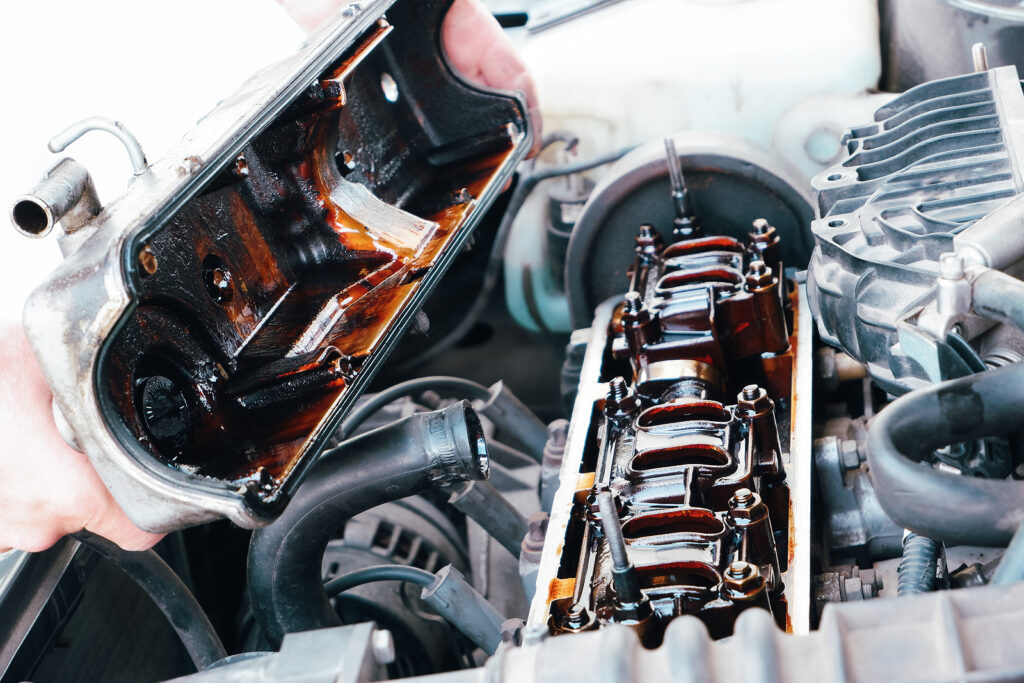
if you’re wondering where the engine sludge is coming from in your car engine, the answer is motor oil. Engine sludge comes from oil It is generated when oil is oxidized or contaminated. If you fail to get an oil change, engine sludge can begin to develop.

Oxidation, or as you know it, resting, naturally occurs to oil overtime. Although it is imminent, excessive oxidation can be abated with routine car maintenance and oil changes. It is important to keep your car oil clean to avoid engine sludge production.

Motor oil can become contaminated by the gasoline you put in your car. Overtime, contamination can lead to the development of engine sludge. Not only should you stay current on routine oil changes, but you should also use at top-quality motor oil to prevent engine sludge formation.

Engine Sludge Will Damage Your Motor

Engine sludge is a serious problem because it can cause major damage to your motor. When engine sludge is present in your engine, the lines are obstructed with gunk, therefore reducing the flow of motor oil through the engine. This can lead to excessive heat and friction, which can damage all components within the car engine. Engine sludge can cause ignition problems and overheating engines too.

Engine Sludge Can Only Be Repaired Professionally

If your car has shown signs of engine sludge development, it is important to take into a licensed mechanic and have it repaired. Only an automotive shop will have the proper resources and technologies to properly eliminate the engine sludge buildup within your motor, safely and without damaging any other components. They can also put you on a routine car maintenance schedule that will prevent engine sludge formation in the future.

Is your car totaled now because the engine had too much sludge in it? If so, contact GC’s Junk Cars at 502-804-5605 to sell your totaled car in Louisville Kentucky for cash on the spot. We provide free junk removal too!

Related Posts:

Is My Car Totaled if the Airbag Deploys?
How to Safely Toss Out an Old Car Battery
How to Prevent Major Engine Repair or Replacement

Louisville Junk Car Buyers 502-804-5605

These 7 Things Will Slowly Total Your Car Overtime

Do you think you have bad or good driving habits? Depending on how you drive, you could be doing damage to your vehicle. Continue reading to learn the top seven things that will slowly damage your vehicle over time, and potentially even render it a total loss.

Louisville KY Junk Car Auto Salvage 502-804-5605

You Can Harm Your Vehicle By…

Revving the Engine

Many drivers believe they can warm the engine up faster by revving the gas pedal over and over again, but this is not good for your vehicle because it leads to engine damage. If it is cold outside, it is best to allow your vehicle’s inner fluids to warm up; but revving the engine is not the right way to do it.

Continuously Pressing the Brakes

Many people also have a habit of “riding the brakes”, which basically means slightly adding pressure on the brake pedal while driving so that they can stop instantly at any time. This practice, often executed on downward hills, is highly damaging to a vehicle’s overall braking system. Driving at lower speeds will help eliminate the urge to keep your foot on the brake petal at all times.

Not Slowing Down for Speed Bumps and Potholes

Speed bumps, potholes, and other surface blemishes can be highly destructive to a vehicle’s suspension and undercarriage parts if you fail to significantly reduce your speed while passing over them. In fact, potholes should be avoided at all costs. Speed bumps should be driven over, cautiously, and slowly.

Driving Around With Very Little Gas

Gas prices are certainly a bummer, but you do not want to drive around with $10 in your tank at all times. Be sure to always fuel up all the way at every fill-up in order to prevent forcing your vehicle to use the old, mucky fuel at the bottom of the fuel tank at some point in time. This will lead to engine damages and clogged filters.

Abruptly Taking Off and Braking

Whether in rush hour traffic or in a big hurry to not be late to work, you do not want to resort to sudden stopping and starting, over and over again. This habit of driving puts a lot of pressure on the internal workings of the braking system and rotors, and significantly increase fuel consumption.

Driving With Improper Tire Inflation

Proper tire inflation is heavily significant to the overall safety and performance of a vehicle. Not only are improperly inflated tires unsafe, but they will also eventually cause other damages to a car. Be sure your tires are not over or under-inflated by checking the levels regularly with a manual tire pressure gauge.

Failing to Stay Current on Routine Auto Maintenance

Routine car maintenance, such as inspections and fluid chances, are imperative for vehicle safety, performance, and longevity. Be sure to have your car serviced according to the instructions in the owners’ manual if you want to avoid unsafe driving conditions and repeated repair costs.

Have you done too much damage to your car and now it is junked? Contact GC’s Junk Cars at 502-804-5605 to sell your junk car in Louisville, Kentucky for cash on the spot! We provide free junk car removal!

You Should Also Like:

The Rule of Proper Gasoline Disposal
How to Prevent Major Engine Repair or Replacement
Car Wreck Insurance Myths to Beware Of

Louisville Junk Car Buyers 502-804-5605

Top 4 Signs of a Broken Car Radiator

The radiator is one of the most important auto parts in a vehicle because it makes sure the engine doesn’t overheat. Without a properly functioning car radiator, you can expect your engine to overheat quickly, which can result in serious internal engine damages and hefty auto shop repair bills. Not sure if your car radiator is doing okay or not?

Continue reading to learn the top four signs of a broken or failing car radiator, and what to do if the cost to replace your car radiator exceeds the total market value of your vehicle.

Sell Your Totaled Car in Louisville Kentucky 502-804-5605

How a Car Radiator Works

A car radiator is one of the primary components of the vehicles cooling system. You’ve heard of coolant before; right? Also known as radiator fluid or anti-freeze, coolant is a vital automotive fluid that is designed to absorb the heat that is generated by the vehicle’s running motor. After coolant absorbs enough engine heat, it travels through the car radiator where it is cooled and then circulated back into the engine to start the process over again.

How to Spot the Signs of a Failing Radiator

There are many signs and symptoms that can suggest a problem with a car’s radiator, but for top the list the majority of the time. These include coolant leaks, engine overheating, radiator sludge, and local levels. If you have noticed any of these 4 signs, you can safely assume the radiator is failing or going bad.

LOW COOLANT LEVELS

If you notice that your coolant levels are inconsistent, or you are refilling your coolant more often than normal, it could be a sign that your radiator is having problems. Typically, your dashboard will have a low coolant line that will eliminate when equivalent levels are too low. More often, this is a sign of a coolant leak.

COOLANT LEAKS

If you’ve noticed coolant accumulating on the floor below your vehicle, you can safely assume you’ve got a radiator leak coolant on your hands. This is a common radiator breakdown problem that requires immediate automotive repair attention. Typically, this is a result of a crack in the radiator.

RADIATOR SLUDGE

The presence of radiator sludge is another tell-tale sign of a bad radiator. Radiator sludge can be detected when checking your coolant levels. Radiator fluid is typically red or green in color, but if there is an excessive level of radiator sludge present, your coolant will take on a rusty or brown color and appear sicker than normal.

OVERHEATING ENGINE

If your car engine is constantly overheating, the radiator might be the first place you want to look. After all, your radiator is a vital component within the automotive cooling system; so, if your engine is getting too hot, it is very likely that your radiator is not doing its job well enough.

Older Broken Radiators and Total Loss Vehicles

If the cost to repair your car’s radiator exceeds the total market value of your car, your car is totaled. In this case, sell your junk car to a local Kentucky cash for cars company for instant cash on the spot! If you simply need to replace your radiator, sell your old one to the same Louisville junk car buyer for an instant cash profit!

Are you looking for a trusted Louisville junk car buyer? Contact GC’s Junk Cars at 502-804-5605 to sell your junk car in Louisville, Kentucky for cash on the spot! We provide free junk car removal!

You Might Also Enjoy:

How to Prevent Major Engine Repair or Replacement
Funny Signs That Tell You It’s Time to Sell Your Junk Car
How to Get Paid for a Totaled Car

Louisville Junk Car Buyers 502-804-5605

Simple Tricks to Improve Gas Mileage in Any Car or Truck

When it comes to personal finances, there is always room for improvement. After all, who doesn’t want to save a few extra bucks here and there? Whether it is one dollar or twenty dollars, savings is savings, which means it’s valuable. A great way to cut back on your weekly and monthly costs is fuel. I know what you’re thinking, and you are right; fuel is a fixed cost in your life, and you depend on it to get from point A to point B. However, if you adopt some more efficient habits, you can increase your gas mileage and lower your fuel costs, therefore saving money!

Continue reading for some simple tricks to improve gas mileage and any car truck, and what to do if your car is simply junked and won’t drive another mile.

Louisville Junk Car and Truck Buyers 502-804-5605

How to Increase Gas Mileage and Lower Fuel Costs

The price of fuel is expensive and only getting higher with each year. This is a known fact that has haunted the everyday driver for years.  When it comes to saving money, saving on gas is usually not an option; but there are ways to make those dollars last you longer than before.

Get Rid of the Heavy Stuff

One of the quickest ways to improve your gas mileage is to remove heavy or accumulated items in your trunk.  Many people are accustomed to storing heavy loads of equipment, golf clubs, clothes, books, and other belongings in the trunk of their vehicles.  The extra weight in the trunk causes the vehicle’s engine to work harder, which burns more fuel.  Removing these items can help improve the amount of fuel your car burns on a daily basis.

Do Not Be Wasteful

There are other ways to save on gas too. For example, avoiding long idle times are great ways to reduce the amount of gas consumption. Do not let your car’s engine run stationary for long periods of time.  This uses a lot of fuel without even driving the car. If you park to eat lunch, listen to music, or talk on the phone, turn your ignition off to save on gas. Also, try and carpool as much as possible, or combine driving trips to save on miles driven on a weekly basis.

Drive With Discipline

Another trick to increasing fuel mileage is simply implementing better driving habits. Drivers that road rage, speed, or swerve every chance they get can be causing damage to their vehicles, as well as, burning up fuel. Aggressive driving can rapidly burn fuel in a car or truck. Simply slowing down and driving in a safe and consistent manner will reduce the amount of fuel you use and protect your car from damages.

Is your car totally junked and couldn’t possibly drive one more mile even if you put fuel inside of it? Contact GC’s Junk Cars at 502-804-5605 to sell your junk car in Louisville, Kentucky as soon as today. We will buy your car or truck no matter what condition it is, and pay you cash on the spot!

You May Also Like:

The Most Expensive Auto Repairs That Can Total Your Car
What is a Junk Car?
5 Things You Need to Do Before Selling a Junk Car

Louisville Junk Car Buyers 502-804-5605

Signs That Suggest You Need to Replace Your Catalytic Converter

Your vehicle is an important asset. After all, if it weren’t, you probably wouldn’t have one. For this reason, it is important to keep your eyes peeled for any signs that suggest it needs some mechanical attention. Most parts and systems can be easily protected and replaced with little cost. But when it comes to the more complex and important systems in your vehicle, like the catalytic converter and engine, it is better to catch their needs early on, before the cost to repair them gets out of control.

Engines will show obvious signs, including indicator lamp warnings on the dashboard. But when it comes to catalytic converters, the signs are more subtle. Fortunately, with a little knowledge, you will know exactly what to look out for, and what to do when it happens.

Continue reading to learn the top signs that you need to replace your catalytic converter, and how to sell your old one for cash on the spot.

Louisville Junk Car Buyers
Sell Us Your Old Car Parts! 502-804-5605

What Does a Catalytic Converter Do?

Before you can learn to spot the signs of catalytic converter mechanical failure, it helps to learn how this vital auto part works in the first place. By understanding the basic operation of a catalytic converter, you will be naturally more in tune with any signs that might pop up.

A catalytic converter is an advanced exhaust emission control device used to reduce carbon monoxide (CO), volatile organic compounds (VOC’s), nitrogen oxides, and similar pollutants produced by automotive engines and fuel. Simply put, they are the automotive component responsible for transforming the harmful emissions into less harmful ones, before exiting the vehicle’s exhaust system.

Fun fact: Catalytic converters operate by using metal catalysts, generally consisting of one or more valuable metals, like platinum, rhodium, palladium, and even gold. This precious metal content is what makes catalytic converters so expensive, and so valuable.

Signs of a Failing Catalytic Converter:

Your Engine is Sluggish or Problematic – If your engine seems like it is not working like it used to, it could be due to a mechanical failure within the catalytic converter. In fact, decreased engine performance is often the very first sign to show up when a catalytic converter is having problems. Usually, the Check Engine Light illuminates on the dash. A blockage or crack within the exhaust system can cause the engine to have poor fuel efficiency, slow acceleration, or power issues.

Your Check Engine Light is On. As mentioned, one of the very first signs you will likely notice when your catalytic converter is malfunctioning is seeing the Check Engine Light, also known as a Malfunctioning Indicator Lamp (MIL). This light is programmed to come on when anything within your vehicle’s systems is affecting the engine’s performance. A common catalytic converter malfunction that causes the Check Engine Light to come on is when it is not catalyzing the exhaust gases correctly.

Your Car is Rattling When it Runs. Hearing rattling noises while the engine is running, whether moving or at an idle, is a common indication that something is going wrong with the exhaust system. More times than not, it is due to the catalytic converter corroding or coming apart.

What to Do With an Old Catalytic Converter in Louisville, Kentucky

Call GC’s Junk Cars at 502-804-5605 if you have a junk car or broken auto part to sell in Louisville and its surrounding areas. Not only do we accept all vehicles, regardless of age, make, model, and condition, our Louisville Kentucky cash for cars company also payout the highest returns for junk vehicles in Kentucky. Just accept our offer and we will come pick up your junk car! Contact us today to request a free estimate! Sorry, we do not accept catalytic converters or tires.

Louisville Junk Car Buyers 502-804-5605

A DIY Guide for Car Radiator Flushing

Once you turn the key, start your vehicle’s ignition, and then begin to drive, your internal combustion engine starts producing a substantial amount of heat.  In order to remove this heat and prevent your engine from overheating, a functional radiator is needed.  A car radiator uses thermal heat exchange to eliminate high temperatures and heat to keep a vehicle’s engine in working condition. This means that larger vehicles require larger radiators to facilitate the same effect.

For radiators to be effective and stay cool, they must be cleaned regularly by means of flushing.  Solid deposits, residues, and other sediment buildup can cause a cooling system to clog or fail entirely. Flushing a car radiator is one of the most important routine maintenance jobs and must be done to keep vehicles operational over time. Fortunately, it can be done on your own.  It’s also quick and inexpensive to do. 

Continue reading to learn some tips that can help you when it comes time to flush your car radiator.

Louisville Junk Car Buyers 502-804-5605

Start By Acquiring the Correct Supplies

The first thing to do when it comes to flushing a car radiator is gather up all the necessary supplies and materials.  It is never a fun situation to get halfway through your project, only to discover you are missing a key element.  Going back to the store could pose a problem; especially if the radiator has already been drained.  Ideal provisions for radiator flushing jobs include a funnel, cloth rag, coolant, radiator flush solution, Phillips screwdriver or wrench, separate container for old coolant, and extra rags for accidents and spills. When you have determined that all your supplies are in place, you can begin the process of flushing the radiator. 

How to Flush Your Car’s Radiator:

Before you remove the radiator cap, be sure the car engine is COMPLETELY cool; otherwise you run the risk of spilling hot coolant on yourself. And this really burns!

Next, flush the used coolant out of the radiator. Do this by locating the radiator drain plug. It is typically located at the bottom of the radiator. If you have trouble finding it, refer to your owners’ manual or look online for pictures and instructional videos. You can also contact a professional mechanic for over-the-phone assistance.

Once you find the drain plug, place the container for old coolant under the drain and open it up. Let the old coolant flow out for a few minutes; if it seems to be moving slow, check to see if the plug is all the way open.

When the radiator is empty, replace the drain plug and open the radiator cap. 

Next, pour the flush cleaning solution inside. Fill the remaining space inside the radiator with room temperature water. 

Now you are ready to replace the radiator cap; just be sure it is screwed on tight.  It is possible for caps to fall off, which allows coolant to escape from the radiator. 

Let the car engine run until it reaches its normal driving temperature.  Then turn it off and let it cool completely. 

Once the car engine is cool again, you are ready to flush the solution from the radiator and add fresh clean coolant.  Use the same emptying process as before.

Use a 50/50 solution of coolant and water to get optimal and safe results.  You can find pre-mixed coolants at your local auto store.  This is sometimes more convenient. 

Is Your Radiator Past the Point of Maintenance of Repair? Did you total your car after attempting to make repairs on your own? If so, just sell it to a local Louisville junk car buyer for instant cash paid on the spot!

The Kentucky Scrap Metal Buyer to Choose

Call GC’s Junk Cars at 502-804-5605 to sell a junk car in Louisville, Kentucky. We are your easiest solution to getting rid of junk and bulking up your wallet, all at the same time! Our experienced and knowledgeable junk car buyers purchase all motor vehicles, regardless of age, make, model, or condition. They don’t even have to run or have all their parts! Not only do we accept all vehicles, regardless of age, make, model, and condition, we also payout the highest returns for junk vehicles in Kentucky. Call 502-804-5605 to get your junk car cash, today.

Louisville Junk Car Buyers 502-804-5605

How to Prevent Major Engine Repair or Replacement

A car’s engine is the heart of your vehicle. Just like ours, it requires regular care and maintenance to sustain and protect its well-being. If you are a car or truck owner, be sure to learn about car engine maintenance and care to increase your engine’s lifespan and performance value  Taking care of a car engine has endless benefits, and can reduce the likeliness of breakdowns and needed repairs. If you are unsure about your car engine’s status of health, you may need to step up your auto care game. If you end up at the repair shop with a hefty engine replacement bill, your car might be deemed a total loss by your insurance company if it is old or already in poor condition.

Continue reading to learn what you need to do to protect your car engine from experiencing major damages and malfunctions, as well as, what you can do with your broken car engine to make up for the cost of engine replacement.

Louisville Junk Car Buyers 502-804-5605

Routine Car Engine Maintenance

There are more than 40 parts in a car engine that require maintenance and care in order to survive. This is why it is important to have your vehicle inspected every year by a professional, because they are trained to routinely inspect these areas and spot vulnerabilities. That way, you don’t have to worry about missing something when it comes to caring for your vehicle’s engine. On the other hand, there are other things you can do as a car owner to maintenance and service your engine.

Changing the car engine oil is one of the biggest factors in engine care. The engine’s oil should be checked every few weeks, especially before long road trips. You can do this on your own, or have a professional check it during routine auto inspections. Keeping a proper supply and level of engine oil in your car is crucial to the vehicle’s performance, as well as, your safety  Think of your car engine oil as the vehicle’s vitamins and nutrients; because it needs fresh and clean oil to survive.

Auto Tune Ups

In between the 80,000 and 100,000 mile marker, it is recommended to have your car engine tuned. Auto tune ups involve a series of services that will refresh and restore a vehicle’s engine. These services involve inspecting parts, such as spark plugs, filters, fuel injectors, and more. An auto tune-up is a great way to restore your car engine’s health, and reduce costly car engine repairs and replacements. If your check engine light is on, it is time for an auto tune up. In other cases, certain signs will let you know you need a car tune up. If it seems like the car’s acceleration power is decreasing, or you hear a knocking sound when you drive, it could be time for a tune-up. 

Forced to Replace Your Broken Car Engine?

If your car engine takes a turn for the worst, and you have to replace it with a new one, the cost can be quite alarming. In many cases, the cost of a brand new motor is higher than the actual worth of the vehicle. When this happens, a car is considered a total loss. You can either take your insurance payout, or you can sell it to a local Louisville junk car buyer. In fact, if you simply need engine replacement, you can sell them your old car engine, regardless of its condition, and still make instant cash from it.

How to Sell a Junk Car or Car Part in Louisville, Kentucky

Call GC’s Junk Cars at 502-804-5605 if you have a junk car or broken car engine to sell in Louisville and its surrounding areas. Not only do we accept all vehicles, regardless of age, make, model, and condition, our Louisville Kentucky cash for cars company also payout the highest returns for junk vehicles in Kentucky. Just accept our offer and we will come pick up your junk car! Contact us today to request a free estimate!

Louisville Junk Car Buyers 502-804-5605